

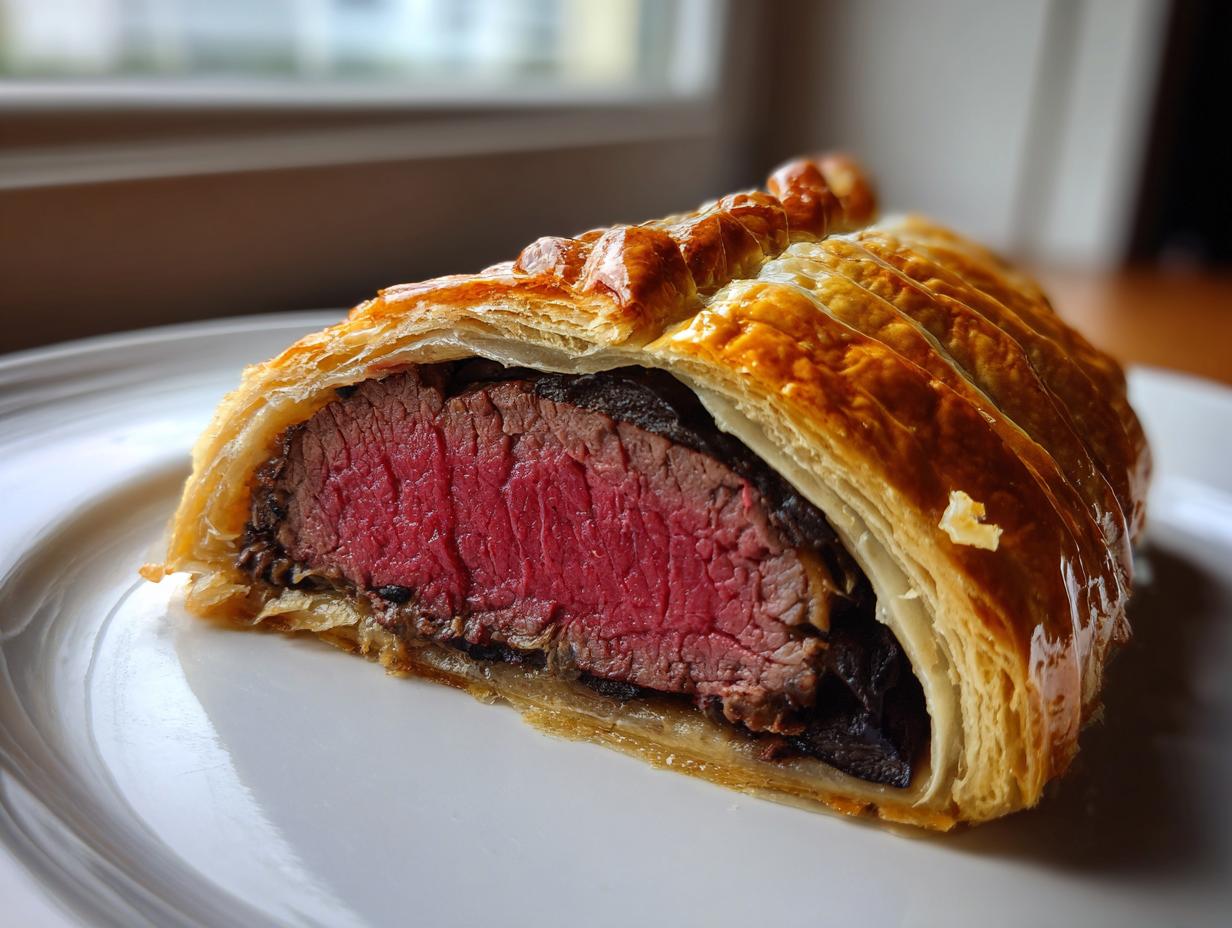
Okay, deep breath! Are you ready to bake something that will genuinely stop traffic? I’m talking about a meal so impressive, so luxurious, that your guests will think you hired a private chef. That’s right, we are tackling the magnificent Beef Wellington. Now, I know what you’re thinking: “That’s way too complicated for me!” But listen, here at DelishCraze, everything, even a stunning dish like this, has to fit into real life. I’ve poured a lot of energy, just like Olivia Rosewood put into building this site here, into making this beef wellington recipe absolutely foolproof. Trust me, following these steps means you get that restaurant-quality result—flaky crust, perfect pink center—without the stress. You’ve got this!
- Why This Is the Best Beef Wellington Recipe You Will Ever Make
- Ingredients for Your Showstopper Main Course Beef Wellington Recipe
- How To Make Beef Wellington: Step-by-Step Instructions
- Tips for Success When Mastering This Beef Wellington Recipe
- Serving Suggestions for Your Holiday Beef Centerpiece
- Storage and Reheating Instructions for Leftover Beef Wellington
- Frequently Asked Questions About the Beef Wellington Recipe
- Nutritional Estimates for This Elegant Dinner Party Ideas Recipe
- Share Your Showstopper Main Course Creation
Why This Is the Best Beef Wellington Recipe You Will Ever Make
If you want that genuine “Wow!” factor at your next dinner party, this is the recipe you need tucked under your apron. We aren’t messing around with shortcuts that ruin the texture. Every step here is designed to deliver maximum flavor and presentation, turning a tough classic into something genuinely achievable for you at home.
- You get an absolutely guaranteed golden, flaky crust—no soggy bottoms here!
- The internal temperature is spot-on every time, giving you beautiful, melt-in-your-mouth beef.
- It looks like something straight out of a magazine, making you look like a culinary genius!
Achieving the Perfect Medium-Rare Beef Tenderloin
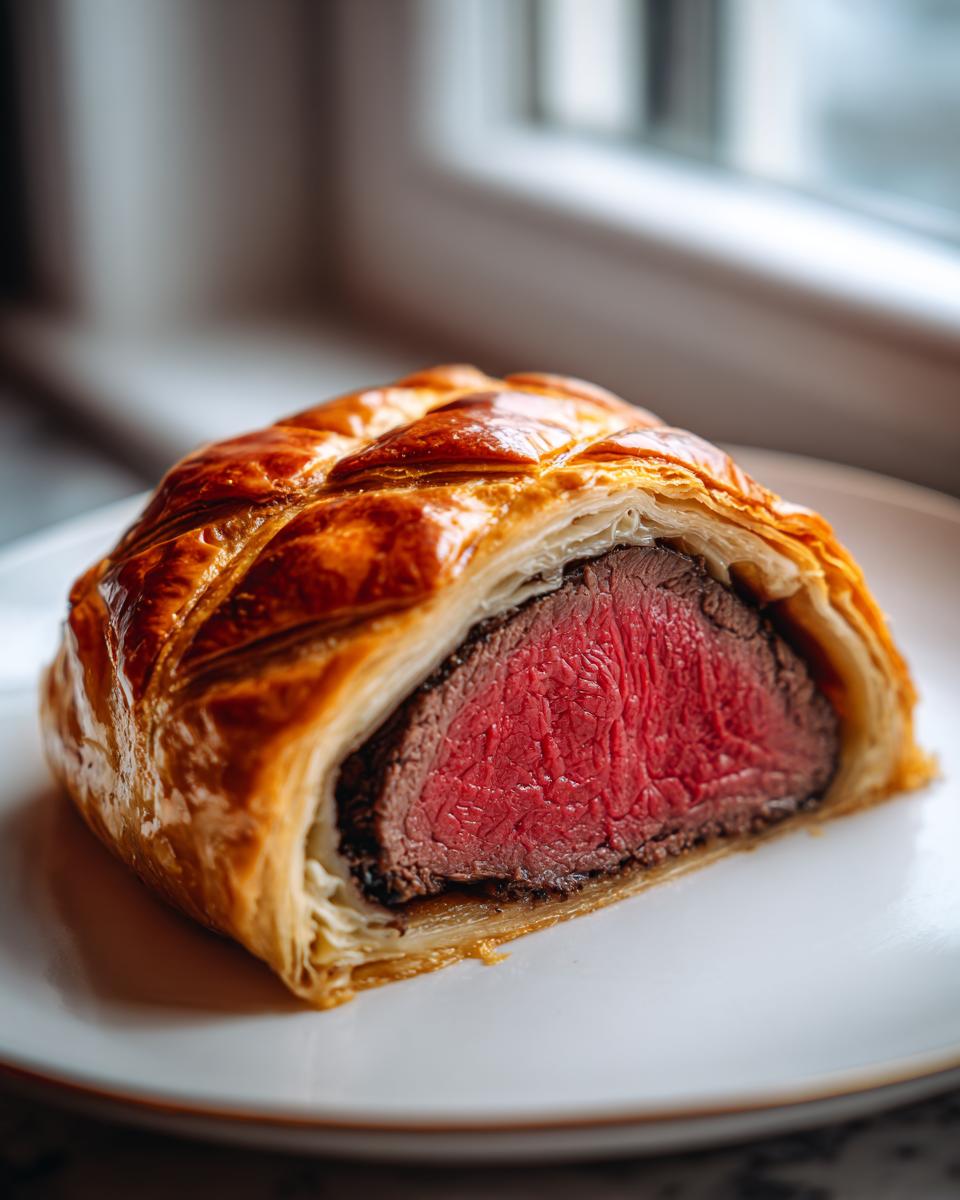
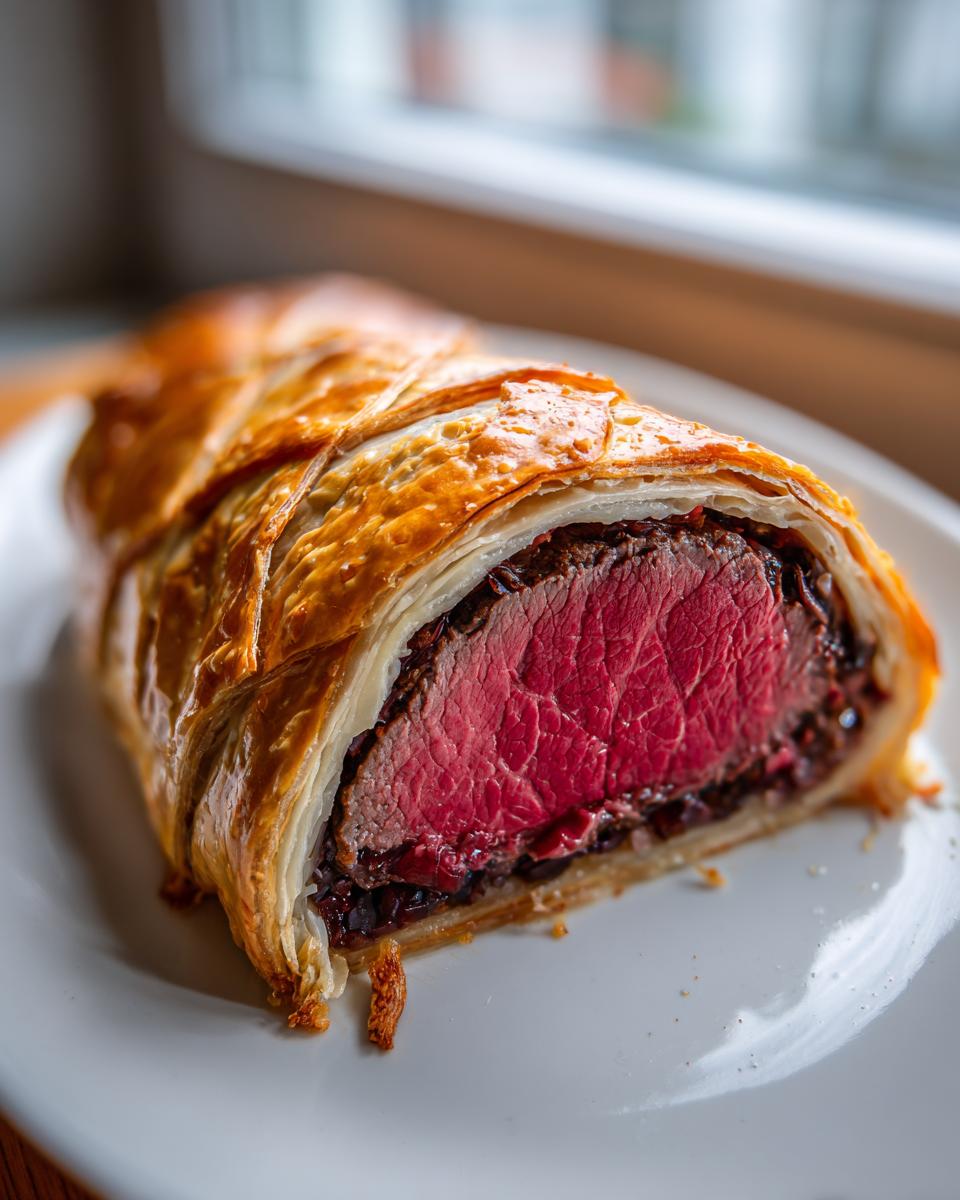
The beef needs to be handled like royalty before it even thinks about meeting the pastry. You absolutely must sear it hard and fast in screaming hot oil until it’s beautifully brown all over. That crust locks in all the incredible flavor! After searing, it needs a little rest time, and then a nice, even coating of Dijon mustard. That little bit of tang cuts through the richness later. Seriously, don’t skip the sear! And please, please use a digital thermometer to get that Perfect Medium-Rare Beef center. It takes all the guesswork out of the equation.
Mastering the Flaky Puff Pastry Recipe
Look, you can try making pastry from scratch, but honestly, when you’re making something this intricate, using high-quality, all-butter puff pastry makes all the difference. Because we chill this Wellington aggressively at two different steps, the fat in that beautiful pastry stays cold. That’s the secret! When the cold fat hits the hot oven, you get those incredible layers. It keeps that dreaded “soggy bottom” far, far away. This is key to your Flaky Puff Pastry Recipe success!
Ingredients for Your Showstopper Main Course Beef Wellington Recipe
Okay, getting your ingredients laid out is half the battle won! Because this dish is so simple in its construction—it’s really just beef, mushrooms, prosciutto, and crust—you can’t get cheap on the quality here. You want this to taste like something truly special, right? That’s why I insisted on the best center-cut beef tenderloin we could find. And remember, every single item in this list must be prepped exactly as noted before we start building, or things get messy!
- 2 pound center-cut beef tenderloin (make sure it’s trimmed nicely!)
- 2 tablespoons olive oil (use a nice one, you’ll taste it!)
- 1 tablespoon Dijon mustard (the smooth kind, not the grainy stuff yet)
- 1 pound cremini mushrooms, finely chopped (this is vital for the duxelles!)
- 2 shallots, finely chopped
- 2 sprigs fresh thyme, leaves only (remember to strip those little leaves off the woody stem)
- 1/4 cup dry white wine (something you’d actually sip!)
- Salt and freshly ground black pepper to taste (be generous on the beef!)
- 12 thin slices prosciutto (the thinner, the better for wrapping!)
- 1 (14 ounce) package all-butter puff pastry, thawed (get this out ahead of time!)
- 1 large egg, beaten (this is our golden ticket for the egg wash)
- Flour, for dusting your work surface—don’t skip this!
Mushroom Duxelles Recipe Components
This layer is non-negotiable; it’s what separates a good Wellington from an incredible one. The texture has to be perfectly dry so it doesn’t steam your pastry later. For the actual Mushroom Duxelles Recipe part, you need those cremini mushrooms, the shallots, the thyme leaves, and that little splash of white wine. That wine cooks right out! It concentrates the flavor incredibly well, making this earthy paste sing against the richness of the beef. Measure carefully here; the ratio of mushroom to shallot is what matters most!
How To Make Beef Wellington: Step-by-Step Instructions
Alright, here is where we put all that preparation together! This isn’t a speed run; this is a careful construction project. Don’t rush the chilling times—that rest period is what saves your pastry from being a soupy mess. We’re building flavor layers upon flavor layers until we get that incredible slice at the end.
Searing and Mustard Coating for the Classic Beef Tenderloin Recipe
First things first, season that beautiful beef tenderloin aggressively with salt and pepper. Then, crank your skillet up until it’s smoking hot with the olive oil. We need a deep, dark sear on every single side—think 1 to 2 minutes per side, nothing more! Once you pull that beef onto a plate to cool down slightly, immediately brush on that Dijon mustard everywhere. This mustard layer is going to seal in the juices and add such needed tanginess inside the pastry shell. Don’t worry if it looks a little messy; you won’t see it again!
Assembling the Prosciutto Wrapped Beef and Chilling
Now for the wrapping! Lay down your plastic wrap—and I mean a big sheet of it—then overlap those prosciutto slices on top like perfect roof shingles. Spread your completely cooled duxelles evenly over the prosciutto. Place that mustard-coated beef right near one edge, and now, grab that plastic wrap! You need to roll the prosciutto and duxelles around the beef *very* tightly. Twist the ends of the plastic wrap like you are closing a giant sausage casing. This forces everything into a perfect cylinder shape. Once it’s tight, pop this into the fridge for a minimum of 30 minutes. This mandatory chill keeps the Prosciutto Wrapped Beef compact.
Encasing in Pastry and Final Bake for Restaurant Quality Beef Wellington
When ready, dust your counter and roll out that puff pastry really thin, about 1/8 of an inch. Take the beef out of the plastic wrap and place it on the pastry. Brush those edges with your egg wash—this is the glue! Wrap it up snugly, sealing all the seams tightly, and flip it seam-side down onto a parchment-lined baking sheet. Guess what? Back into the fridge it goes for another 20 minutes! Preheat that oven to 400 degrees Fahrenheit (200 degrees Celsius). Brush with remaining egg wash, score it nicely (just a light decorative touch, don’t cut through!), and bake for about 30 to 40 minutes. We are aiming for 125–130 degrees Fahrenheit internal temp for that Perfect Medium-Rare Beef. If you want amazing peppercorn sauce to go with it, keep that in mind while it bakes! For more tips on achieving that celebrity chef look, check out this great resource on Gordon Ramsay’s technique with Beef Wellington.
Tips for Success When Mastering This Beef Wellington Recipe
Look, even with the best recipe, Wellington can throw you a curveball because it’s high-stakes cooking! But don’t sweat it. These pointers are the things I learned after my first few attempts—mistakes were made so you don’t have to make them. We’re talking about the true secrets to Mastering Beef Wellington and getting that golden, crisp crust.
The number one enemy here is moisture. I already hammered this home, but it bears repeating: your duxelles must be cooked until it’s dry enough to crumble slightly. If you leave wine or mushroom water in there, that moisture will steam the bottom of your pastry, and you’ll have a sad, squishy base. Think of cooking the duxelles as baking it twice!
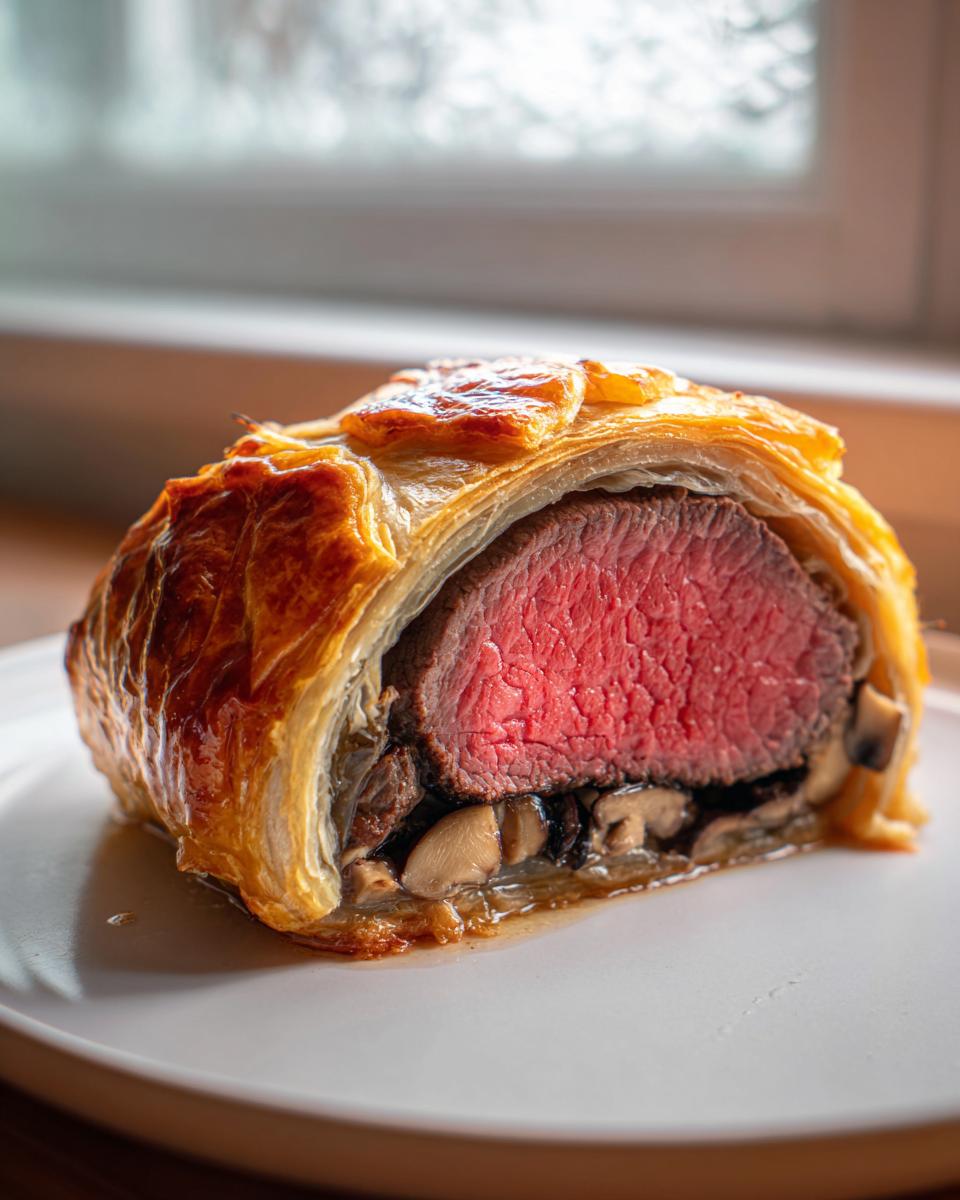
Another thing that trips people up is cutting into it too soon. I know, I know, everyone is eyeing that gorgeous pink beef, but you have to let it rest for at least ten full minutes after it comes out of the oven. Resting is essential for the juices to redistribute. If you slice immediately, all those wonderful, beefy juices just run out all over your cutting board, and you are left with dry meat inside the pastry. Nobody wants that!
If you are feeling nervous about the whole pastry enclosure, check out this great advice on how to handle beef when you’re cooking for smaller groups, like with this Beef Stroganoff for Two—it teaches technique without the massive pressure. And if you really want to dive deep into the psychology of why celebrity chefs do things a certain way, I always appreciate the breakdown that The Kitchn provides on Ramsay’s methods!
Serving Suggestions for Your Holiday Beef Centerpiece
Once you’ve successfully wrestled that magnificent thing out of the oven and let it rest, the next job is making the rest of the plate worthy of this stunning creation. You can’t serve a Holiday Beef Centerpiece like this with just microwaved green beans, right? We need sides that are elegant, comforting, and, most importantly, easy enough that they won’t stress you out while the Wellington is baking.
First up, you absolutely need something creamy to soak up any little bit of beef juice that might escape when slicing. You know I’m obsessed with texture, so skip the normal mashed potatoes and go straight for the good stuff. Seriously, these baked mashed potatoes? They are fluffy, rich, and sturdy enough to handle the weight of the Wellington slice. They bake in the oven, so you don’t have to stand over a stovetop panicking.
For the green component, keep it bright to cut through all the richness of the beef, pastry, and duxelles. Simple roasted asparagus is always a winner—toss it with olive oil, sea salt, and maybe a little lemon zest right before serving. Green beans almondine works too, but keep the topping light. The goal here is contrast, not competition!
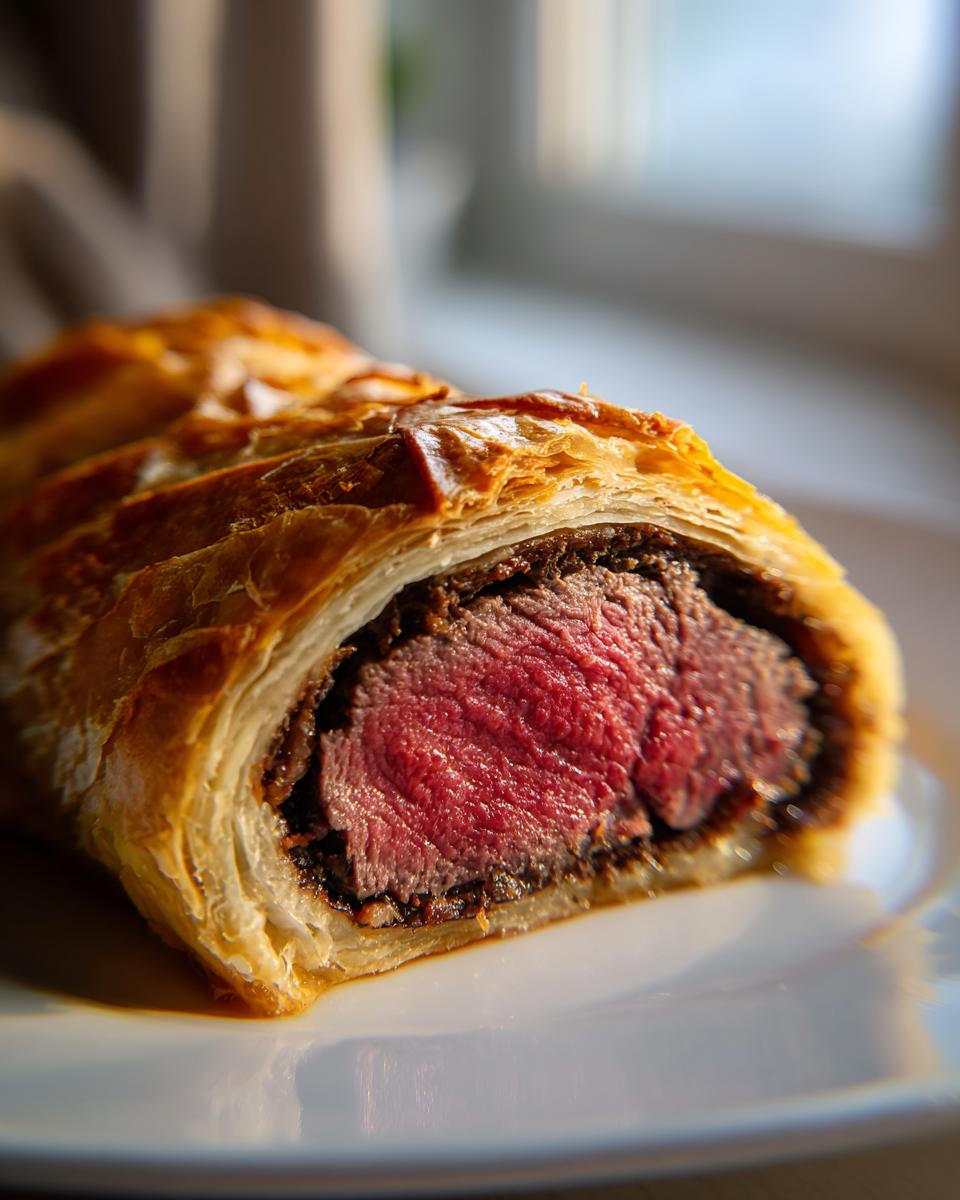
And finally, if you want to get really fancy for your Special Occasion Meals, a simple pan sauce is divine. You can use the accumulated juices in the bottom of your roasting pan, maybe deglaze that with a splash of red wine or beef broth, and whisk in a tiny pat of cold butter right at the end. Just pour a little drizzle around the plate, not over the crust— we need to protect that crispy pastry at all costs!
Storage and Reheating Instructions for Leftover Beef Wellington
Oh, the glory of leftovers! If you managed to have any Beef Wellington left over—which, frankly, is rare in my house—you need to store it correctly. Since this dish has three components that react differently to storage (meat, mushroom paste, and pastry), we have to treat it with respect. First, only store what you immediately know you’ll eat within a couple of days. The quality starts to drop after day two, especially because of that moisture-sensitive pastry.
Wrap the slices very tightly, first in plastic wrap, pressing gently to remove air pockets, and then wrap that bundle again in aluminum foil. It needs to be sealed tight against fridge odors. It should keep okay in the refrigerator for about three days, tops. Do *not* store this at room temperature, and definitely don’t leave the leftovers sitting out after dinner—those ingredients don’t play well together for long.
Now, the crucial part: reheating. Please, for the love of all things crisp and delicious, put away that microwave! Heat from a microwave attacks moisture, making the pastry turn into sad, chewy glue. We want to rescue that flaky crust, remember?
The absolute best method for reheating Beef Wellington is back in the oven. It’s slow, but it’s the only way to re-crisp that pastry and warm the beef gently. Set your oven to a low temperature—I’m talking around 325 degrees Fahrenheit (160 degrees Celsius).
If you have big slices, it can take 15 to 20 minutes to warm through without overcooking the beef inside. If the pastry starts looking a little pale but the middle isn’t hot enough, you can carefully tent it with foil halfway through. You are gently bringing the internal temperature up without driving the beef past medium!
If you had the sense to save a little bit of that amazing sauce we talked about earlier, bring that sauce up separately on the stovetop. Then, just pour a little warm sauce right next to the slice on the plate, never drowning the pastry. This way, you keep that beautiful golden bake intact, and you still get all those incredible, savory juices!
Frequently Asked Questions About the Beef Wellington Recipe
I totally get it—this is a showstopper, and when you’re making something this fancy, you’re going to have questions! It can feel intimidating, but once you nail down these few details, you’ll feel like a true pro. I gathered the questions I get asked most often about the assembly and timing. Don’t worry if you need to prep things over a couple of days; sometimes the best results come from taking your time.
Can I substitute the beef tenderloin in this beef wellington recipe?
That’s a great question for anyone trying to keep costs down or who can’t find a perfect cut! While the traditional, signature texture of this Gourmet Beef Dinner comes from using a center-cut beef tenderloin (because it’s so lean and uniform), you *can* substitute it with an equally thick center-cut beef fillet. Just make sure whatever you choose is trimmed beautifully and is relatively uniform from end to end. A thinner piece or an uneven cut will cook unevenly, and that’s not what we want under that pretty pastry!
How far ahead can I assemble the beef wellington recipe?
This is the most important timing question! You can assemble the Wellington completely—seared, wrapped in duxelles/prosciutto, and completely encased in the raw pastry—up to 24 hours ahead of time. However, you MUST keep it extremely cold. Pop it on a baking sheet in the coldest part of your fridge. Chilling it for at least 30 minutes before wrapping, and then again for 20 minutes before baking (as we noted in the steps), is key, but freezing it solid overnight is actually a fantastic way to get that pastry perfectly crisp when baking from frozen!
If you’re looking for something a little faster for those busy nights when you still want great flavor, you might want to check out my guide for quick and easy weeknight dinners. But for this, patience pays off!
Nutritional Estimates for This Elegant Dinner Party Ideas Recipe
Now, let’s talk fuel! I know when you’re making a stunning dish like this—truly one of the best appetizers and party snacks to serve alongside, perhaps—you might be curious about the breakdowns. Because this is a true luxury item, it is higher in fat and calories than your average weeknight meal, but goodness, it’s worth an indulgence for a special occasion!
Keep in mind that these numbers are just estimates, because the size of your beef cut, the exact brand of puff pastry you use (all-butter makes a difference!), and how much sauce you drizzle on later will all change things. This is a rough guide based on the ingredients listed for a single slice.
- Serving Size: 1 slice
- Calories: About 550 (Yes, it’s a treat!)
- Protein: A hefty 38g (That tenderloin packs a punch!)
- Total Fat: Around 35g
- Saturated Fat: Roughly 15g
- Carbohydrates: About 25g (Mostly coming from that glorious pastry crust)
- Sugar: Very low, around 3g
See? Huge on protein, which keeps you satisfied, and relatively low on the sugar side, even with the pastry! It’s richness wrapped in richness, but you absolutely deserve that slice of this Elegant Dinner Party Ideas success when you pull it off. Enjoy every single bite!
Share Your Showstopper Main Course Creation
Now listen, after all that hard work—the searing, the chilling, the perfectly sealed pastry—you deserve serious applause! Making a Beef Wellington elevates your entire cooking game. I genuinely want to hear how it went for you. Did you get that perfect rosy pink center? Did your kitchen smell absolutely incredible while it rested?
Please, please hop down to the comments section below and tell me everything! Don’t just say it was good; tell me what wine you served, what appetizers you paired with it before the big reveal, and how many times you checked that thermometer! Your feedback truly helps me and helps other home cooks who are nervous about tackling this masterpiece for the first time.
And if you snapped a photo of that glorious cross-section—you know, the one where the pastry is golden and the beef is perfectly medium-rare—I want to see it! Tag me on social media. Seeing your success stories is the absolute best part of running this kitchen. Knowing I helped bring that stunning Showstopper Main Course to your table? That’s why DelishCraze exists!
PrintClassic Show-Stopper Beef Wellington Recipe

Make this classic Beef Wellington, a show-stopping main course featuring tender beef tenderloin wrapped in mushroom duxelles, prosciutto, and flaky puff pastry. This recipe guides you to achieve a perfect medium-rare center and a golden crust for your special occasion meal.
- Prep Time: 45 min
- Cook Time: 40 min
- Total Time: 1 hour 45 min
- Yield: 4 servings 1x
- Category: Dinner
- Method: Baking
- Cuisine: British
- Diet: Low Calorie
Ingredients
- 2 pound center-cut beef tenderloin (chateaubriand)
- 2 tablespoons olive oil
- 1 tablespoon Dijon mustard
- 1 pound cremini mushrooms, finely chopped
- 2 shallots, finely chopped
- 2 sprigs fresh thyme, leaves only
- 1/4 cup dry white wine
- Salt and freshly ground black pepper to taste
- 12 thin slices prosciutto
- 1 (14 ounce) package all-butter puff pastry, thawed
- 1 large egg, beaten (for egg wash)
- Flour, for dusting
Instructions
- Season the beef tenderloin generously with salt and pepper. Heat olive oil in a large skillet over high heat. Sear the beef on all sides until deeply browned, about 1-2 minutes per side. Remove the beef and let it cool slightly. Brush the entire surface of the cooled beef with Dijon mustard.
- Prepare the duxelles: Place the finely chopped mushrooms, shallots, and thyme leaves in a food processor. Pulse until the mixture is very finely chopped, resembling coarse paste.
- Cook the duxelles: Transfer the mushroom mixture to a dry, wide skillet over medium heat. Cook, stirring frequently, until all the moisture has evaporated. This takes about 10-15 minutes. Add the white wine and cook until it evaporates. Season with salt and pepper. Spread the duxelles onto a plate to cool completely.
- Assemble the wrap: Lay a large sheet of plastic wrap on your work surface. Arrange the prosciutto slices on the plastic wrap, overlapping them slightly to form a rectangle large enough to encase the beef.
- Spread the cooled duxelles evenly over the prosciutto layer. Place the seared, mustard-coated tenderloin at one end of the prosciutto.
- Using the plastic wrap to assist, tightly roll the prosciutto and duxelles around the beef. Twist the ends of the plastic wrap tightly to form a compact cylinder. Chill the wrapped beef in the refrigerator for at least 30 minutes, or up to 24 hours, to help it hold its shape.
- Roll the pastry: Lightly dust your work surface with flour. Roll out the puff pastry into a large rectangle, about 1/8 inch thick, large enough to fully enclose the beef.
- Remove the beef from the plastic wrap and place it on the pastry. Brush the edges of the pastry with the egg wash. Fold the pastry over the beef, trimming any excess dough. Seal the seams tightly, ensuring the beef is completely encased. Place the Wellington seam-side down on a baking sheet lined with parchment paper. Chill for another 20 minutes.
- Preheat your oven to 400 degrees Fahrenheit (200 degrees Celsius). Brush the entire surface of the chilled Wellington with the remaining egg wash. Score the top lightly with the back of a knife to create a decorative pattern, being careful not to cut through the pastry.
- Bake for 30 to 40 minutes for medium-rare (internal temperature of 125-130 degrees Fahrenheit). The pastry should be deep golden brown and crisp.
- Rest the Wellington on a cutting board for at least 10 minutes before slicing into thick portions. Serve immediately.
Notes
- For the best results, make sure the duxelles mixture is completely dry before wrapping the beef. Excess moisture causes soggy pastry.
- Use a meat thermometer inserted into the center of the beef to gauge doneness accurately.
- If the pastry browns too quickly before the beef is done, loosely tent the Wellington with aluminum foil.
Nutrition
- Serving Size: 1 slice
- Calories: 550
- Sugar: 3
- Sodium: 450
- Fat: 35
- Saturated Fat: 15
- Unsaturated Fat: 20
- Trans Fat: 1
- Carbohydrates: 25
- Fiber: 3
- Protein: 38
- Cholesterol: 140