

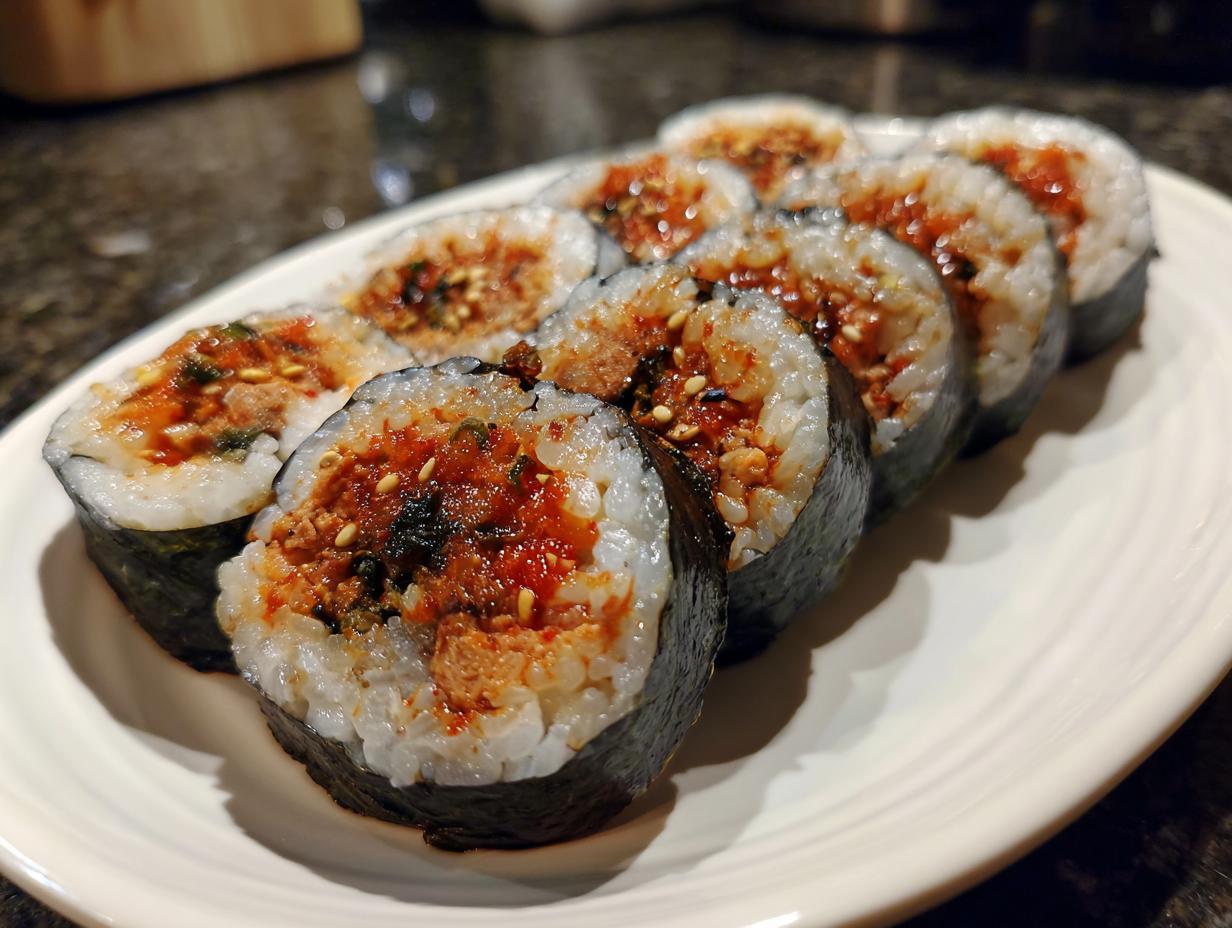
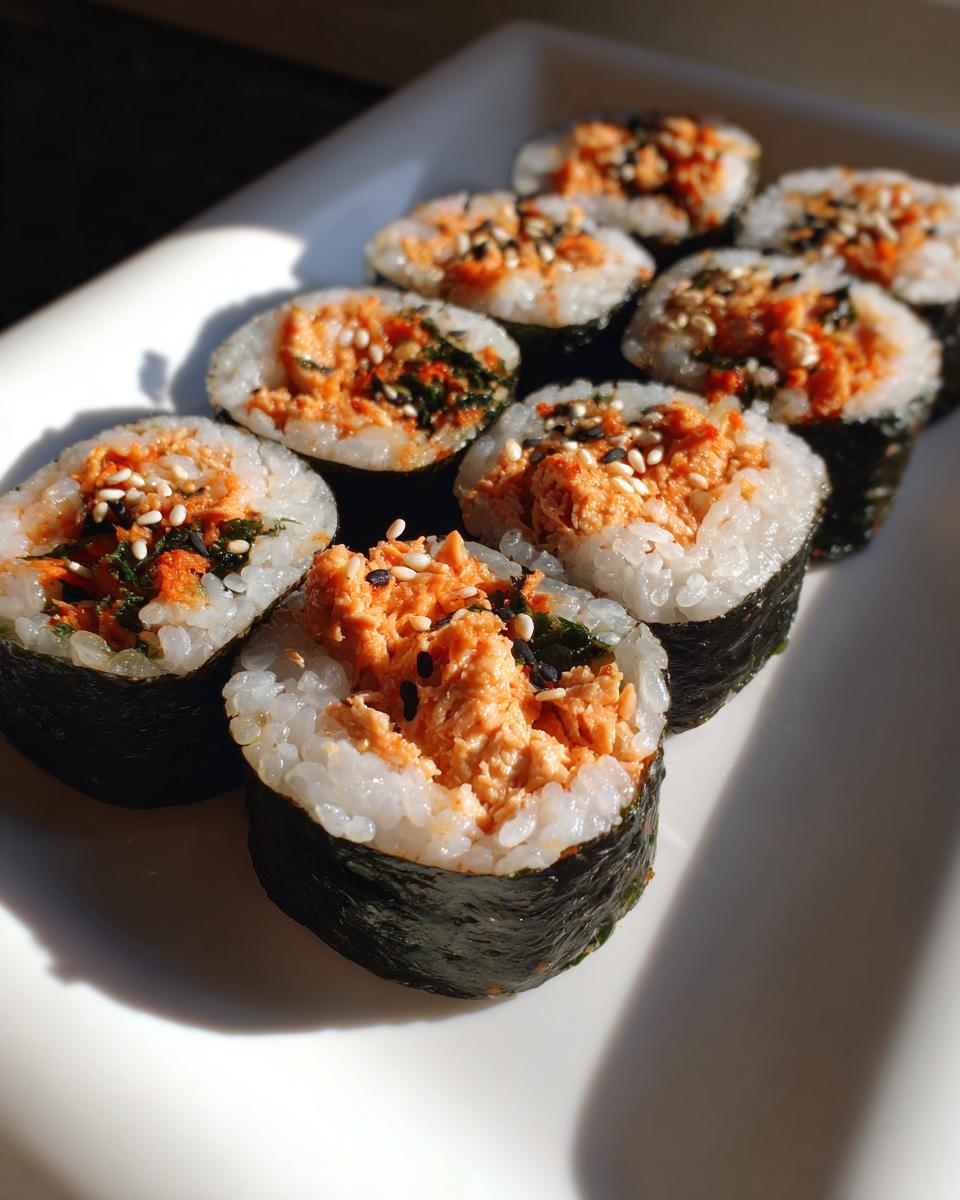
When life gets totally hectic, sometimes you just need a meal that tastes amazing, fills you up, and takes virtually no time at all. That’s where my **tuna kimbap** comes in! Seriously, if you haven’t jumped on the Korean rice roll train yet, this is your moment. We are diving into Chamchi Kimbap today, specifically the spicy version that just hits that perfect spot between savory and satisfyingly warm. At DelishCraze, my goal has always been to show you that connecting with food doesn’t require hours on a Tuesday night. This recipe proves that you can pull together something genuinely flavorful and special—like this handheld comfort food—using ingredients you probably already have stashed away.
- Why This Spicy Tuna Kimbap Recipe Works for You
- Gathering Ingredients for Perfect Tuna Kimbap
- Step-by-Step: How to Make Tuna Kimbap at Home
- Tips for Perfect Tuna Kimbap Rolling and Slicing
- Kimbap Filling Ideas Beyond Spicy Tuna Kimbap
- Serving Suggestions for Your Savory Rice Rolls
- Storage and Reheating Instructions for Tuna Kimbap
- Frequently Asked Questions About Chamchi Kimbap Recipe
- Share Your Homemade Tuna Kimbap Creations
Why This Spicy Tuna Kimbap Recipe Works for You
I get it, you’re busy. Who doesn’t want incredible food that doesn’t leave you staring at the clock until 9 PM? That’s exactly why I’m obsessed with this tuna kimbap. It truly delivers on flavor without wasting your time. Forget complicated fillings that need pre-cooking; this recipe is designed for speed and real-life schedules.
Here’s why I know this recipe will become a staple for you:
- It’s a 15-minute wonder! Once your rice is cooked, assembly is lightning fast.
- We are relying on pantry staples—drained canned tuna is key here—so less running to the store.
- It’s fantastic for making ahead. These rolls are perfect for packing up as creative bento box ideas Korean style.
- You control the heat! Don’t like things too fiery? Easy, just dial back that Sriracha.
Honestly, if you love the idea of sushi rolls but want something heartier, creamier, and miles easier on your wallet, this savory rice roll is your answer.
Gathering Ingredients for Perfect Tuna Kimbap
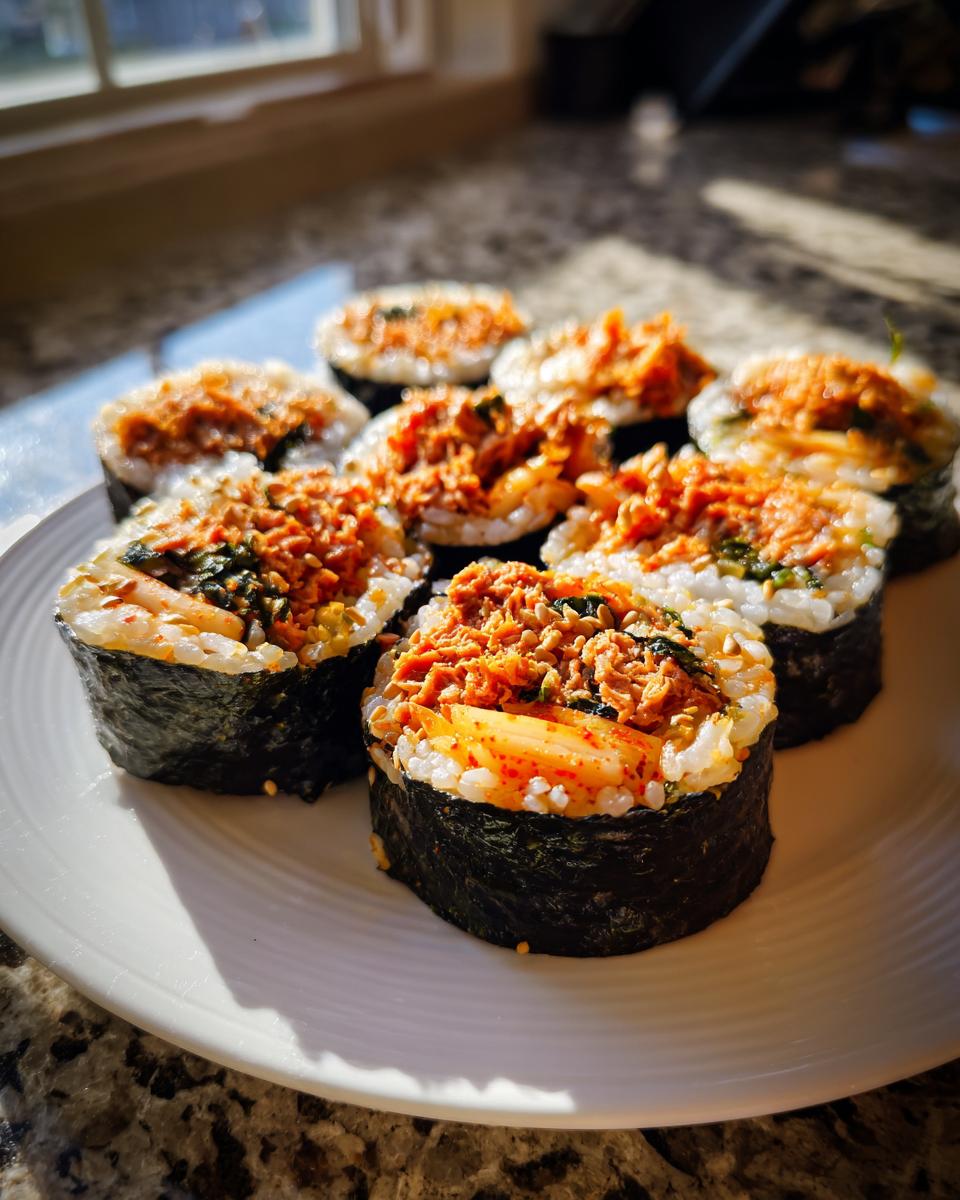
Okay, let’s talk about what you need to gather. Since this is a quick Korean lunch, we aren’t dealing with a giant grocery list, which I love! Everything here should be easy to find, but the quality really matters when the ingredient list is short like this.
First up is your base: you definitely need short-grain rice. It sticks together perfectly, which is crucial when we start rolling this amazing tuna kimbap. Don’t forget to season the rice once it’s cooked with sesame oil, salt, and seeds—that’s where the flavor foundation starts.
For the star of the show, the filling, grab that can of tuna (drained, please!) and the secret weapon: Japanese mayonnaise, like Kewpie if you can find it. That mayonnaise is tangier and richer than what we usually use here in the States, and it makes the filling sing. Of course, we need Sriracha for that spicy kick and some freshly chopped green onion.
Finally, for rolling, you need the roasted seaweed sheets, or gim. I always tell everyone to invest in good quality nori; if it’s fresh and crisp, it won’t crack on you during the roll. If you’re feeling adventurous, grab some perilla leaves to wrap inside too! That’s what gives it that authentic lift.
Step-by-Step: How to Make Tuna Kimbap at Home
Alright, let’s get rolling! This part is actually the most fun, and if you’ve never learned how to make Kimbap at home before, I promise you can nail this. Everything comes together super quickly since we aren’t cooking any veggies—it’s mostly assembly work. Just keep your ingredients ready and organized, and watch how fast these savory rice rolls come together! We’ll have these ready for a quick weeknight Korean meal in no time.
Seasoning the Rice for Your Korean Rice Rolls
First up is the rice—don’t skip the seasoning! Mix your cooked short-grain rice gently with the sesame oil, salt, and sesame seeds right away. You need to mix this really carefully using a folding motion, almost like you’re fluffing it, not smashing it. We want separate, defined grains, not mush. This perfectly seasoned rice is what makes your final tuna kimbap taste authentic.
Creating the Spicy Tuna Filling (Chamchi Kimbap recipe)
Now for that glorious filling! Drain your tuna really well—we don’t want a watery mess inside our rolls. Mix that tuna vigorously with the mayonnaise, the Sriracha, and the chopped green onions. Honestly, this is where you adjust things to your liking. Taste a little bit! If you want more heat, add a dab more Sriracha. This creamy, spicy mixture is the heart of a truly great spicy tuna kimbap.
Assembling and Rolling Your Easy Kimbap Tutorial
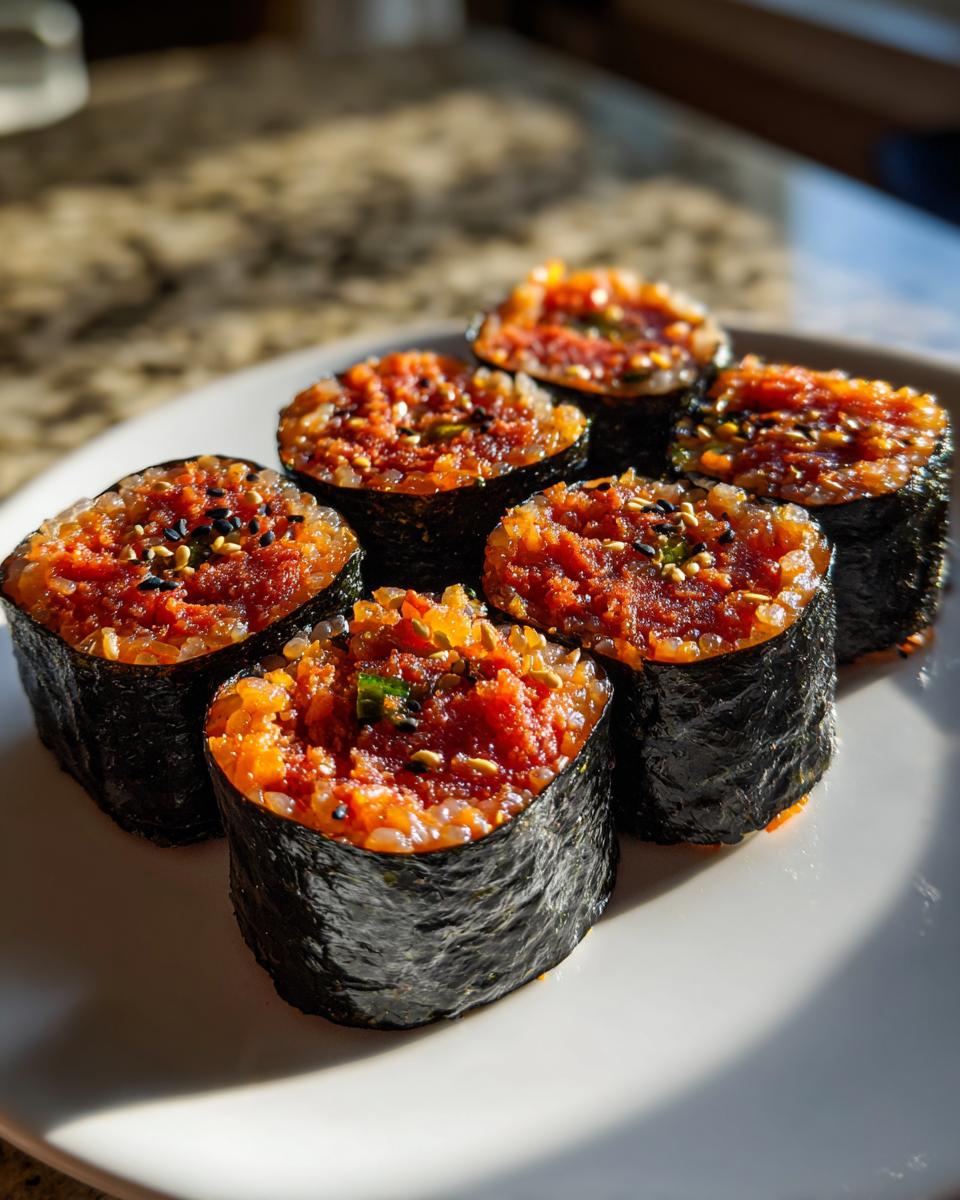
Time to put it all together on your bamboo mat. Lay the seaweed (shiny side down!) flat. If you grabbed those perilla leaves, lay one down first for an extra layer of flavor. Now, wet your hands—this stops the rice from sticking everywhere—and spread about a quarter of your rice evenly across the sheet, but you must leave about an inch clear at the top edge. This sticky-free border is your seal! Lay your tuna filling neatly in a line across the center.
Now, grab the edge of the mat closest to you and fold it tightly over the filling, tucking it in as you go. Keep rolling smoothly and firmly. Once you reach that clear edge, use just a tiny bit of water on your fingertip to seal it shut. Don’t overfill, or the roll explodes—a common mistake when first trying this tuna kimbap tutorial! After rolling, brush the outside lightly with sesame oil and sprinkle on those last seeds.
Tips for Perfect Tuna Kimbap Rolling and Slicing
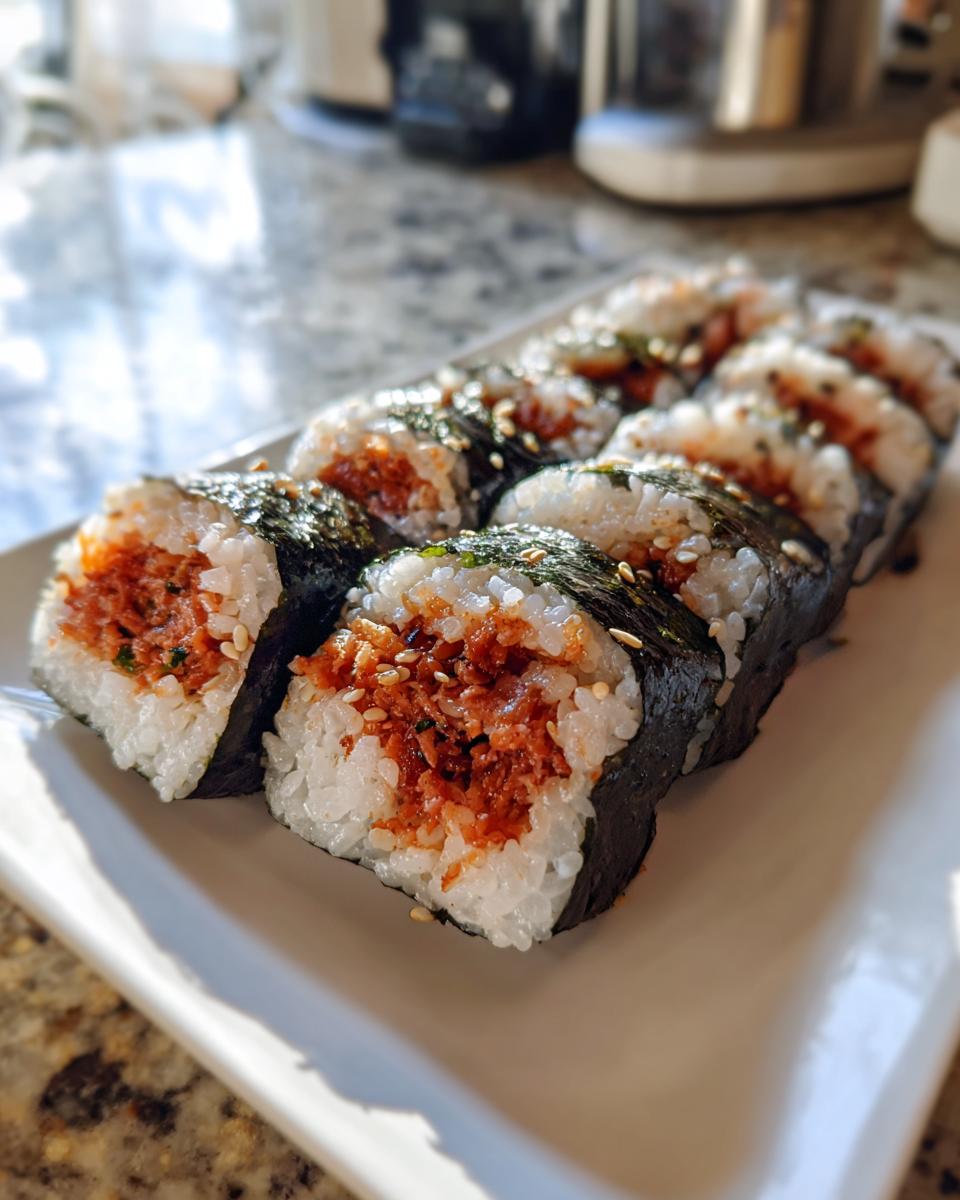
Listen, I know rolling can feel intimidating when you’re making tuna kimbap for the first time. Trust me, I’ve wrestled with more messy seaweed sheets than I care to admit over the years! The biggest thing I learned is that being too heavy-handed is the enemy here. If you’re new to this, start small. Use less of that amazing spicy tuna filling than you think you should. It makes managing the initial tuck and roll so much easier for beginners.
When it comes to slicing, this is a pro move I always share: get a really sharp knife and moisten the blade with water before every single cut. If the knife sticks or drags through the seaweed, you’ll squish your beautiful rolls! A moist, sharp blade glides right through for clean, Instagram-worthy bites.
And please, don’t panic if you don’t have perilla leaves—they are optional! You can easily skip them or substitute something crisp like a thin slice of cucumber if you want that satisfying crunch alongside your creamy filling. This recipe is flexible, just like my favorite spicy tuna roll alternatives.
Kimbap Filling Ideas Beyond Spicy Tuna Kimbap
You know, once you master this simple seasoned rice, the possibilities for savory rice rolls are endless! While the spicy tuna filling is totally addictive, I always like to keep a few other simple ideas in my back pocket, especially if I have leftover rice that needs using up. It’s all about maximizing what you have in the fridge!
If you’re looking for some easy Kimbap filling ideas that don’t involve opening a can of tuna, try these next time you are putting together a batch:
- Classic Vegetable Marinade: You can quickly sauté or lightly blanch carrots, spinach, and yellow pickled radish (danmuji). Season them lightly with a touch of sesame oil and salt. This gives you a super fresh, vibrant roll that pairs beautifully with that sticky rice.
- Simple Egg Strips: Make a thin savory omelet using a couple of eggs whisked with a splash of water. You just cook it low and slow, roll it up like a crepe, and slice it into nice strips. This is a super simple protein filler that everyone loves.
- Imitation Crab Delight: If you have imitation crab sticks, shred them up and mix them with a tiny bit of Japanese mayo and maybe a squeeze of lemon juice. It gives you a lovely texture similar to the tuna filling but completely different flavor profile. Just be sure to drain any excess moisture!
These alternatives mean you never have to rely on just one filling. It makes a beautiful presentation when you cut into a selection of rolls! If you’re burnt out on tuna, try looking at my recipe for creamy tuna pasta salad for inspiration on flavor combinations!
Serving Suggestions for Your Savory Rice Rolls
Now that you’ve mastered making the rolls, how should you serve up this amazing tuna kimbap? They are seriously the perfect standalone snack, but if you are laying out a larger spread, a few simple additions take things up a notch. These rolls are fantastic as picnic food Korean style—just pack them right up!
For a truly authentic bite, you must have some crunchy pickled radish on the side. The bright, tangy snap cuts right through the richness of the spicy tuna mayo so nicely. If you want a dipping sauce, keep it super simple; a little drizzle of just soy sauce or maybe a tiny mix of soy sauce and rice vinegar works wonders.
If you’re feeling like going a little more decadent, I actually love serving these rolls with a side of my creamy sauce, just for dipping! It’s a fun fusion moment, and honestly, it tastes great. They are meant to be enjoyed right away for the best texture!
Storage and Reheating Instructions for Tuna Kimbap
Let’s be real; the absolute best way to eat this tuna kimbap is fresh, right after you finish brushing those rolls with sesame oil. That’s when the seaweed is crispest and the seasoned rice is perfect. But hey, life happens, and leftovers are a reality!
If you have any left from your quick Korean lunch, wrap the rolls up tightly in plastic wrap or put them in a good airtight container. You can keep them in the fridge for about one or two days maximum. Now, here’s the important part: skip the microwave! Reheating ruins the texture of the seaweed and makes the rice hard. Eat them cold, straight from the fridge.
Honestly, they get a little firmer when chilled, but the flavors still meld beautifully. I often serve them with a little extra drizzle of sesame oil or just alongside some spicy kimchi if they’ve been chilling out overnight. For anything else, I usually refer to my guides on stretching leftovers, like this one for no-cook sauces that can jazz up a cold roll!
Frequently Asked Questions About Chamchi Kimbap Recipe
I know when I’m trying a new recipe, I always have a handful of questions floating around in my head before I even start digging through the ingredients. Don’t worry, that’s totally normal! Since this spicy tuna kimbap is such a staple for quick meals, I’ve collected the common things people ask me about making these savory rice rolls at home. I always point people back to my guide on quick and easy weeknight dinners if they need more speed tips!
Can I use regular mayonnaise instead of Kewpie for the tuna kimbap?
You absolutely can! If you can’t find Japanese mayonnaise, regular mayo works just fine in a pinch. Kewpie is famous because it’s a bit tangier and richer, but your standard mayo will still give you that creamy texture your filling needs. Don’t let a missing ingredient stop you from getting these amazing rolls made!
Is this recipe suitable for Bento Box Ideas Korean Style?
Oh, yes. This recipe is practically designed for your lunchbox! Because the filling is based on canned tuna, it’s very stable once the rolls are chilled. They hold their shape beautifully when sliced and packed up. We make huge batches specifically to use for grab-and-go meals throughout the week.
How long does this tuna kimbap last in the refrigerator?
For the absolute best texture, you should eat these within a day. They are perfectly fine stored in an airtight container in the fridge for one to two days maximum. Just remember what I said earlier: they eat best cold. The rice tends to firm up slightly after 24 hours, but that’s just how it goes with seaweed wraps!
Share Your Homemade Tuna Kimbap Creations
I truly hope you enjoyed learning how easy it is to whip up these amazing tuna kimbap rolls. This recipe is all about bringing simple, delicious comfort food into your busy life. Please come back and leave me a five-star rating if you loved this! I absolutely adore seeing your creations over at DelishCraze; tag me online or drop a comment below. You can always learn more about our mission to keep kitchen moments simple over on our About Page!
PrintEasy Spicy Tuna Kimbap (Chamchi Kimbap)

Make this popular Korean rice roll at home. This recipe focuses on the spicy tuna filling, perfect for quick weeknight meals, bento boxes, or picnics.
- Prep Time: 15 min
- Cook Time: 0 min
- Total Time: 15 min
- Yield: 4 servings 1x
- Category: Lunch
- Method: Rolling
- Cuisine: Korean
- Diet: Vegetarian
Ingredients
- 2 cups cooked short grain rice
- 1 teaspoon sesame oil (for rice)
- 1 teaspoon salt (for rice)
- 1 teaspoon sesame seeds (for rice)
- 1 can (5.3 oz) canned tuna in oil, drained
- 2 tablespoons Japanese mayonnaise (Kewpie recommended)
- 1 tablespoon Sriracha sauce (adjust for spice level)
- 2 tablespoons green onion, very finely chopped
- 4 sheets roasted seaweed (nori or gim)
- 4 perilla leaves, washed and dried (optional)
- 1 teaspoon sesame oil (for brushing rolls)
- 1 teaspoon sesame seeds (for topping)
Instructions
- Prepare the seasoned rice: In a bowl, mix the cooked rice with 1 teaspoon sesame oil, 1 teaspoon salt, and 1 teaspoon sesame seeds. Mix gently until combined.
- Prepare the spicy tuna filling: In a separate bowl, combine the drained canned tuna, Japanese mayonnaise, Sriracha sauce, and finely chopped green onion. Mix well until you have a creamy, uniform filling.
- Prepare the rolling station: Lay a bamboo rolling mat flat. Place one sheet of seaweed, shiny side down, on the mat. If using perilla leaves, place one leaf on top of the seaweed sheet.
- Spread the rice: Moisten your hands slightly. Take about one-fourth of the seasoned rice and spread it evenly over the seaweed, leaving about a 1-inch border clear at the top edge.
- Add the filling: Place a line of the spicy tuna mixture horizontally across the center of the rice.
- Roll the kimbap: Lift the edge of the mat closest to you and start rolling tightly, pressing the filling in as you go. Use the clear edge of the seaweed to seal the roll.
- Finish the roll: Once rolled, gently brush the outside of the seaweed wrapper with a light coat of sesame oil and sprinkle with sesame seeds.
- Slice and serve: Using a sharp, slightly moistened knife, slice the roll into bite-sized pieces. Serve immediately or pack for a quick Korean lunch.
Notes
- For a beginner-friendly approach, use less filling so the roll is easier to manage.
- If you do not have perilla leaves, you can omit them or substitute with a thin slice of cucumber for crunch.
- Adjust the Sriracha amount to control the heat; this is a great spicy tuna sushi alternative.
- This recipe works well for bento box ideas Korean style because it holds its shape.
Nutrition
- Serving Size: 1 roll (approx. 8 slices)
- Calories: 350
- Sugar: 3
- Sodium: 450
- Fat: 12
- Saturated Fat: 2
- Unsaturated Fat: 10
- Trans Fat: 0
- Carbohydrates: 45
- Fiber: 2
- Protein: 18
- Cholesterol: 30